
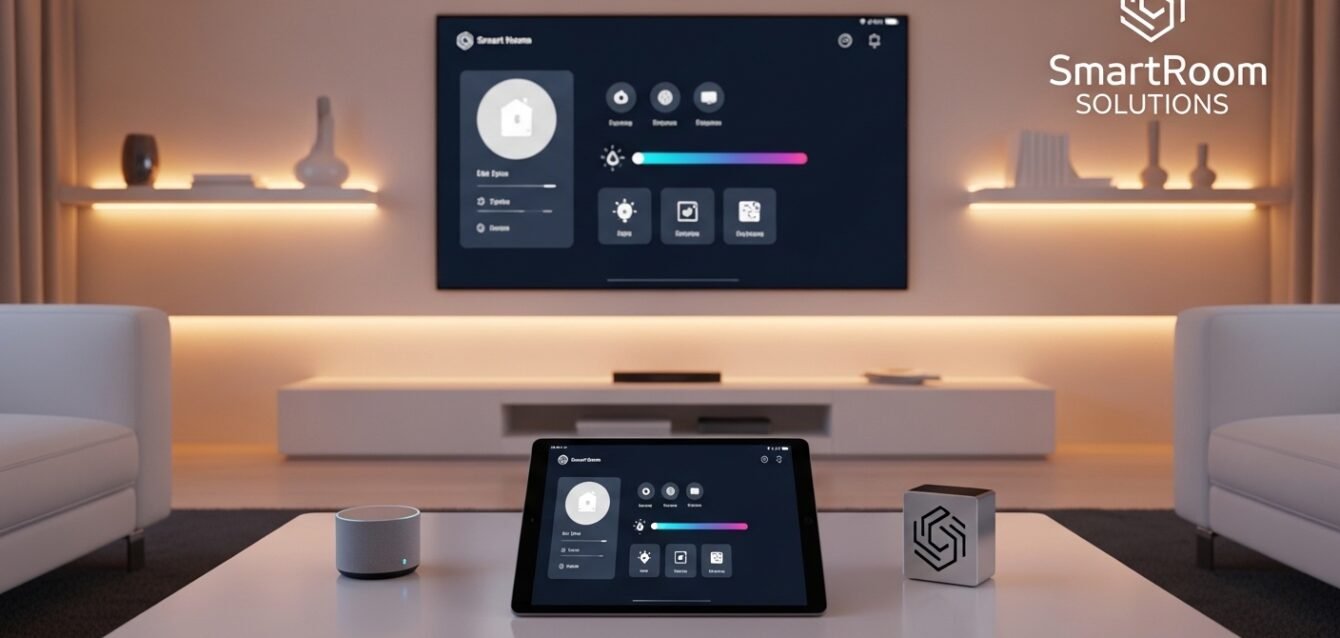
These four technologies are all part of a broader Smart Solutions ecosystem, but each one serves a different purpose within a connected environment. Automation focuses on controlling systems such as lighting, HVAC, curtains, and other operational functions through predefined scenarios and intelligent workflows. Energy Management is designed to monitor and analyze power consumption in order to reduce waste, lower operating costs, and improve efficiency. Environmental Sensors detect important conditions such as smoke, gas, fire, and water leaks, providing real-time alerts to help prevent damage and improve safety. Voice Control Integration allows users to interact with systems hands-free through platforms such as Amazon Alexa and Google Assistant.
While each of these technologies has its own individual role, their real value appears when they are integrated into one unified solution. For example, environmental sensors can detect an issue such as smoke or a gas leak and trigger an automated response, such as activating an alarm, adjusting ventilation, or sending an alert to the user. Energy management can work alongside automation to optimize how and when systems operate, reducing unnecessary power usage. Voice control adds another level of convenience by allowing users to manage connected systems instantly without needing manual controls. Together, these components create a smarter, more adaptive environment that responds to both user needs and operational conditions.
Understanding the difference between these technologies is important for choosing the right solution for a home, office, or facility. Some projects may prioritize automation and convenience, while others may focus more on safety, sustainability, or ease of control. The best smart environments are built by combining these technologies based on the client’s lifestyle, business requirements, and operational goals. This is why a customized smart solution is often the most effective way to achieve long-term value, comfort, and efficiency.